
Chow Hang Tung
206页判词,说来说去,就是追求民主有罪。
我不认为任何政党可以将国家主权私相授受,自称代表人民的选择,自称是唯一的领导,然后还宣称每个人在法律上都有义务拥护它这个自封的王位。这样的所谓法律,不过是暴政的同义词。
相信专政是错的、民主是对的,这不是信念,又是什么?即使法庭和政府不停念咒,声称我们接受审判的并非信念,也改变不了一个事实:在这份判决之下,相信“结束一党专政”这一理念的人,再无立足之地。在这样的“法律”眼中,我们只要抱有这种思想,就已经违宪、非法,犯下了原罪。即使我们所做的只是一件完全正当的事情,例如悼念六四,也会因为我们思想上的“不正确”而变成犯罪。
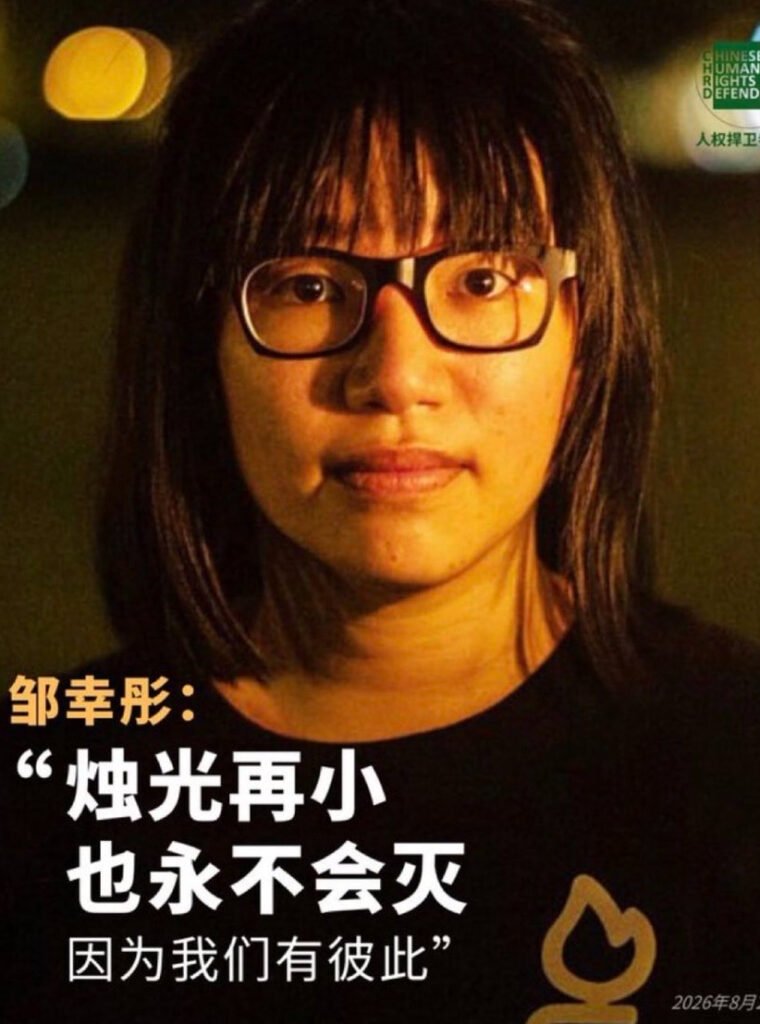
但是,法律无法控制任何人的思想。不但控制不了,当法律执意与良知为敌,输的只会是法律,失去公信力的也只会是法律。
做人要有底线,法律同样要有。民主与专政之辨,就是其中最重要的一条底线,因为专政之下没有法治。当法庭完全抽空“结束一党专政”这一诉求之所以产生的事实背景和是非对错,只是一味强调政权的意志和所谓守法的义务,其实就等于说,生活在纳粹德国统治之下,就有义务参与屠杀犹太人一样荒谬。这样的做法,只会使法律失去彰显公平正义的灵魂,沦为任由权力驱使的傀儡。
纳粹和极权统治之下一次又一次的惨剧,正是这种不问是非、只求服从的态度造成的。如今,无论是法庭还是国家,都在重走同一条危险的老路。甚至随着科技进步、国家力量增强,随着国家成为公认的“大国”,今天的危险只会比当年更加严重。
作为国民,我们有责任将国家权力重新关进民主的牢笼,履行我们作为国家主人的义务,对它加以控制和监督。这样做,不仅是为了替过去的伤害讨回公道,也是为了防止更大的灾难再次降临。一味以国家安全之名,喂养一部我们无法控制的国家机器,任由它蚕食人性与良知,悲剧的发生只是迟早的事。
因此,结束一党专政,是我们这一代香港人也好、中国人也好,都无可回避的责任。这件事必须由我们自己完成,也只能由我们自己完成,没有任何外人可以代劳。
这是我真诚的想法和信念,而且不只是我一个人的信念——维园三十年的烛光已经证明了这一点。“结束一党专政”是人民的底线,是普世的诉求。当法律不自量力地试图挑战它,只会自取其辱。
法庭假装问题不在于传播思想,而在于所谓散播敌意。但是,“结束一党专政”这一信念,从来不需要依靠什么敌我思维,也不需要煽动仇恨来维系。我们只需要摆事实、讲道理,就足以得到所有明事理者的支持。
因为专政本身就是最大、最明显的一种不公义。它无视每个人的平等和自主,将一套毫无道理可讲的统治秩序强加于人,把自由的公民统统贬低为无权选择的奴隶。结束一党专政,不过是要争取人之为人应有的尊严。这个道理,任何不是装睡的人都应该看得明白。
只有道理讲不通的人,才总要依靠仇恨进行动员,而我们根本不需要这样做;只有毫无自信的人,才会看什么都充满敌意,而我们也根本不会这样看待世界。对于我们所相信和坚持的一切,我们有绝对的信心。专政依靠仇恨维持统治,不等于所有人都必须采用它的那一套,也不等于这个世界真的围绕仇恨运转。对平等与正义的信念,对人性与真相的尊重,从来都是比仇恨更加强大、更加持久的力量。
信念是无法计算、无法交易的。为了自己所相信的一切而求情、道歉,是最虚伪的事情,也是对所有抱有同样信念者的侮辱。所以,我不会这样做,也不能这样做。连屠城的刽子手都还没有站出来道歉,什么时候轮到我们道歉?!即使世道颠倒,我们也不应该为政权做错的事情道歉,让自己也成为颠倒是非的一部分。
对于过去的一切,我拒绝使用犯罪的语言和概念,去分析我们所做的事情有多么严重或不严重。如果法庭真的需要什么参考,可以去问由共产党领导的国安公署。他们才真正懂得如何用犯罪的眼光看待争取民主和人权的努力。他们还一直毫不避讳地声称,本案性质严重,必须严惩,完全不认为自己是在干预司法独立。无论如何,如果法庭最后真的裁定我们属于“情节严重”,我会把它当作对我们的赞美,因为这说明我们确实做出了一些成绩。
能够找到自己所相信的使命,找到可以并肩作战的伙伴,是人生最幸福的事情。因此,对于我与支联会、与香港人共同走过的道路,我一点也不后悔。只是辛苦了我的家人和爱我的人,我唯一需要请求原谅的,也只有他们。
至于将来,无论身在狱中还是狱外,我都会继续为释放民运人士、平反八九民运、追究屠城责任、结束一党专政、建设民主香港与民主中国而努力。我会继续学习、充实自己,进行各种尝试,直到民主到来的那一天。这是我曾经无数次公开作出的承诺,也是我在烛海之中向死难者许下的庄严誓言。我不打算做一个言而无信的人。
如果这样做会使我成为永远的罪犯,如果法律真的容不下我们的信念,那么我宁愿做一个罪犯,也不愿做一个背叛良知的人。我会和所有不认命的香港人一起,继续走完这条尚未走完的民主之路。
烛光如海,
人心成涛;
粉身拍岸,
不平不休。
邹幸彤
English translation:
- The 206-page judgment, after all, boils down to saying that pursuing democracy is a crime.
- I find it entirely unpalatable that any political party can barter away a nation’s sovereignty, claim to represent the will of the people, appoint itself as the sole authority, and then insist that citizens are legally bound to uphold its self-fashioned throne. A law of this nature is nothing more than a euphemism for tyranny.
- Believing that dictatorship is wrong and democracy is right – if that isn’t a belief, then what is? Even if the courts and the government attempt to claim, like a chanted mantra, that they are not judging beliefs, they cannot change the reality: under this judgment, anyone who believes in the principle of “ending one-party dictatorship” has nowhere left to stand. In the eyes of this brand of “law,” holding such a thought inherently contravenes the Constitution – rendering it unlawful, an original sin. Even when we engage in entirely legitimate acts, such as commemorating June 4th, it becomes a crime simply because of the perceived “impropriety” of our thoughts.
- Yet the law cannot govern what a person thinks. Not only is it incapable of doing so, but when it openly defies the human conscience, it is the law itself that ultimately suffers – forfeiting its very legitimacy.
- People must draw a line somewhere, and the law must do the same. The distinction between democracy and dictatorship is one of the most fundamental of these lines, because genuine rule of law simply cannot survive under a dictatorship. When the Court completely disregards the underlying facts and the boundaries between right and wrong behind the demand to “end one-party dictatorship,” choosing instead to blindly enforce the will of the regime and a supposed duty to obey, its conduct becomes as absurd as claiming that one living under Nazi Germany had a duty to participate in the slaughter of the Jews. Such an approach strips the law of its essential pursuit of justice, reducing it to little more than a puppet driven by power.
- It was precisely this unthinking obedience, devoid of any judgment of right or wrong, that brought about repeated horrors under Nazi rule and other totalitarian regimes. Today, both the judiciary and the state risk treading that exact same dangerous path. Indeed, given rapid technological advances, the expansion of state power, and the nation’s assertion of itself as a recognised “major power,” the present threat is greater still than that of the past.
- As citizens, we have the responsibility to put state power back into the cage of democracy, exercising our duty as the masters of the nation to control and supervise it. This is vital not only to secure justice for past grievances, but to prevent even greater catastrophes from befalling us again. Surrendering unchecked authority to a state apparatus we cannot control under the banner of national security – allowing it to erode basic humanity and conscience – means that tragedy is only a matter of time.
- Ending one-party dictatorship is therefore an inescapable responsibility for our generation of Hongkongers and Chinese alike. This is a task that we must achieve for ourselves – indeed, we are the only ones who can; no outside force can do it for us.
- This is my sincere belief, and it is far from mine alone – as three decades of candlelight in Victoria Park have already proven. “Ending one-party dictatorship” is the people’s bottom line; it is a universal demand. When the law overreaches and tries to challenge it, it only brings humiliation upon itself.
- The Court pretends the issue is not about disseminating ideas, but rather the so-called sowing of hostility. Yet the belief in “ending one-party dictatorship” has never relied on an us-versus-them mentality or the incitement of hatred to sustain itself. We need only rely on facts and reason – that alone is enough to win the support of all reasonable people.
- Dictatorship itself is the greatest and most blatant form of injustice: it disregards the equality and autonomy of every individual, imposes a system of rule that defies all reason, and reduces free citizens to slaves with no right to choose. Ending one-party dictatorship is simply about reclaiming the dignity that is the birthright of every human being – a truth that anyone not wilfully pretending to sleep should easily understand.
- Only those who have no rational argument left must continually rely on hatred for mobilisation – and we simply refuse to do so. Only the profoundly insecure see hostility at every turn, and we certainly do not view the world in such terms. We hold absolute confidence in everything we believe and stand for. That a dictatorship depends on hatred to maintain its rule does not mean everyone must adopt its methods, nor does it mean the world truly revolves around hatred. A belief in equality and justice, and respect for humanity and truth, has always been a more powerful and enduring force than hatred.
- Belief is something that cannot be calculated or traded. To plead for mercy or apologise for everything one believes in is the most hypocritical act imaginable, and an insult to all who share those beliefs. That is why I will not do it – and why I cannot. The executioners who massacred a city have not even come forward to apologise; when on earth will it be our turn? Even when the world is turned upside down, we must not apologise for the wrongs committed by the regime, lest we ourselves become part of that inversion of right and wrong.
- As for everything that has happened in the past, I refuse to use the language and concepts of crime to analyse how serious or otherwise what we have done may be. If the Court truly needs a reference point, it can ask the Office for Safeguarding National Security led by the Communist Party – they know full well how to view efforts to fight for democracy and human rights through a criminal lens. They have consistently and unabashedly insisted that this case is serious in nature and must be severely punished, without the slightest sense that they are interfering with judicial independence. In any event, if the Court ultimately finds our case to be “serious in circumstances,” I shall take it as a compliment, for it shows that we have indeed achieved something.
- Being able to find a mission in which one believes, and partners to fight alongside, is the greatest joy in life. Thus, I have no regrets about the path I have walked with the Hong Kong Alliance and the people of Hong Kong. I have only caused hardship to my family and those who love me; they are the only ones whose forgiveness I must seek.
- As for the future, whether I am inside prison or outside it, I will continue to work for the release of pro-democracy activists, the vindication of the 1989 democratic movement, accountability for the massacre, the ending of one-party dictatorship, and the building of a democratic Hong Kong and a democratic China. I will continue to learn, to enrich myself, and to make every kind of effort until the day democracy arrives. This is a promise I have made publicly countless times, and a solemn vow I made to the dead in a sea of candlelight. I have no intention of becoming a person who breaks their word.
- If doing so makes me a criminal for life – if the law truly cannot accommodate our beliefs – then I would rather be a criminal than a person who betrays their conscience. I will walk this unfinished road of democracy together with all Hongkongers who refuse to accept their fate.
- Candlelight like a sea,
Hearts of the people become a tide;
Bodies dash against the shore,
Unresting until justice is done.